
A horse is one of the most powerful animals you can work with. But without a harness, that power goes wherever the horse decides. You don’t get to choose the direction, the speed, or the destination. You just hold on and hope.
We’re in a similar moment with AI. The power is there. It’s more accessible than it’s ever been. And businesses everywhere are trying to grab hold of it. The problem is that most of them are grabbing the horse without building the harness.
Everyone is chasing the engine
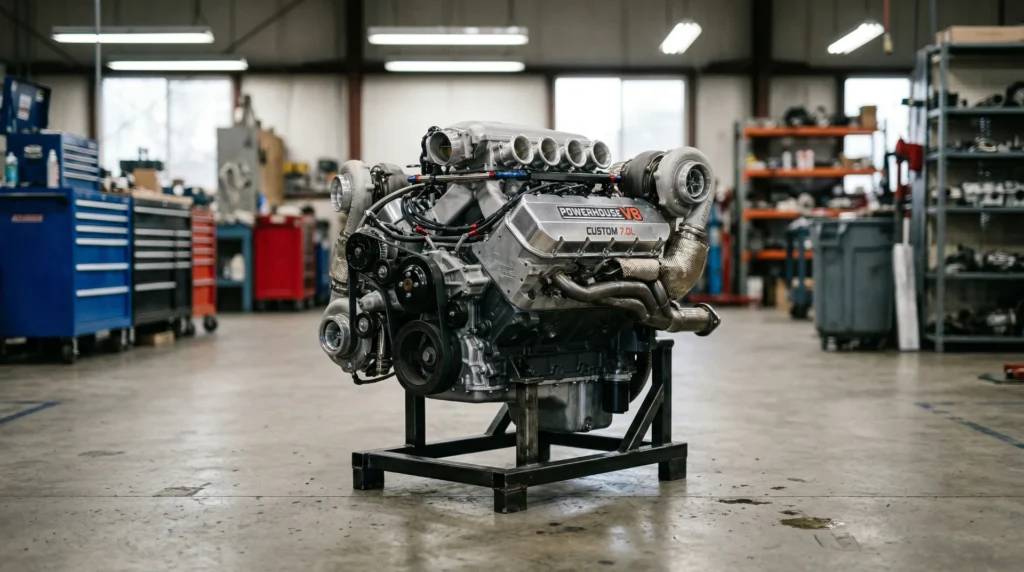
Think about a car for a second. The engine creates the power. But an engine on its own is a block of metal on a workshop floor. It doesn’t go anywhere until it’s connected to wheels, a steering column, brakes, a dashboard, and a body that holds it all together.
AI is the engine. It can process data, make decisions, generate content, spot patterns, and work at a speed no human team can match. That part of the equation is solved. Tools like Claude, GPT, and open-source models have made it available to virtually any business. You don’t need a research lab or a million-dollar budget anymore.
So everyone rushes to bolt an AI engine onto their operations. A chatbot here. An invoice automation there. A report generator in the corner. Each one taps into real power. And each one, in isolation, kind of works.
But kind of working is the problem.
What happens without a harness

You’ve probably seen it already. The AI does something unexpected and nobody catches it. An automation fires at the wrong time because it doesn’t know about the rest of your process. Data ends up in the wrong place because the workflow was built to do one thing, with no awareness of what comes before or after.
Tools like n8n and Zapier can do impressive things, including approval steps and database writes. But they operate at arm’s length from your business. They don’t share your app’s data model, your auth context, your UI, or your business logic. They interact with your systems through API calls from the outside. That’s a fundamentally different thing from an AI agent that lives inside your own software, with native access to your data, your rules, and your interface.
Multiply that by ten or twenty automations across your business and you’ve got a collection of powerful little engines all running independently. No steering. No brakes. No dashboard. Just power, pointed in various directions, and a team trying to keep track of it all in their heads.
The harness is custom software
This is where the conversation needs to shift. Most people think the next step is more AI. More automations. More power. It isn’t. The next step is control.
The harness is the bespoke software that wraps around your AI and gives it structure. It’s the steering wheel, the brakes, and the dashboard. It decides where the power goes, how fast, and under whose authority.
When automation lives inside a purpose-built system, it behaves differently. It stores what it needs in your system, not in a disconnected cloud tool. It combines AI with traditional software, each handling what it does best. The AI makes the judgment calls. The software provides the rules, the structure, the memory, and the interface.
And the people in your business stop being passengers and start being drivers.
Humans at the wheel

One of the most important parts of a good harness is knowing when to let the horse run and when to pull the reins.
Every automated process poses the choice: auto-approve or human review. Routine, low-risk work runs end to end without anyone touching it. But decisions that involve money, clients, or sensitive data? The system pauses. It presents the result to a human, along with the reasoning the AI used to get there. The human reads it and then approves, amends, or rejects.
No data entry. No copying between systems. No chasing information across five tools. The person’s job becomes oversight and judgment, not grunt work.
This is what control looks like. Your team isn’t replaced by AI. They’re elevated by it. They’re driving, not running alongside the horse trying to keep up.
An isolated workflow wasn’t designed for this. It struggles to present AI reasoning for review, enforce an approval chain, or remember what happened last time. Those things require a system that was built around your process, not bolted onto it from outside.
More control means more power

You don’t sacrifice power for control. You unlock more of it.
When your automations are isolated and fragile, you keep them small. You limit what they can touch because you’re not confident about what happens when something goes wrong. The power is right there, but you only use a fraction of it.
The harness changes that. You trust the system because you can see what it’s doing. You trust the AI because a human can review its reasoning. You trust the automation because it’s logged, traceable, and operating within rules you defined.
So you use more of it. You extend it to more processes, more users, more client touchpoints. Your team actually wants to use it. Your clients see something polished and coherent, not a patchwork of generic tools. Trust compounds. Adoption follows.
That’s the 10x. Not 10x more AI. 10x more adoption, traceability, trust, and customer joy.
The power was never the problem
Five years ago, bespoke software was routinely a R500,000+ conversation before you saw a line of code. That’s changed. AI-assisted development has made it possible to build these solutions faster and much more capable, at much reduced cost. The same AI that powers your automations also powers the tools used to build your harness.
The equation has flipped. Power is abundant and affordable. What’s scarce is the control layer: the custom software that directs it all, holds it together, and makes it usable by real people in real businesses.
If you’ve been automating in pieces and wondering why it feels fragile, why your team doesn’t fully trust it, why your clients never see the benefit, the answer probably isn’t more power.
It’s a better harness.
ReadyRun helps businesses map their operations across 41 domains and 1,100+ capabilities, identify what’s missing, and build the harness to make it all work. Start with a free Blueprint at readyrun.tech.